
Criminal Court Records in Sheridan County
Criminal court records are opened when charges are filed in court. In Sheridan County, the local criminal case file is kept through the Sheridan County District Court in the 15th Judicial District. The court record is not the same as a sheriff booking record. A booking can exist before a case appears online, while the court file begins to track the prosecution once a complaint, information, citation, or related charging document is filed.
Kansas district courts are general-jurisdiction trial courts. The 15th Judicial District describes district court jurisdiction as including civil and criminal matters, divorce and domestic relations, probate and administration of estates, guardianships, conservatorships, care and treatment, juvenile matters, small claims, and appeals from municipal courts and administrative agencies. For Sheridan County criminal matters, the practical local court contact is Sheridan County District Court, 925 9th Street, PO Box 753, Hoxie, KS 67740, phone 785-675-3451.
How to Search Sheridan County Criminal Court Records
Start with Kansas District Court CaseSearch for public district court case information. Search by case number if possible, then by defendant name or citation information. If a criminal case is not visible online, call or visit the clerk because courthouse terminals and clerk access may show public records not available through a broad online search. Certified copies also require the clerk.
- Open Kansas District Court CaseSearch.
- Search by criminal case number, defendant name, or citation number from law-enforcement or court paperwork.
- Confirm the result is a Sheridan County District Court matter before relying on the docket.
- Read the docket entries for charge filing, arraignment, bond, motions, plea, disposition, sentence, probation, costs, and warrants.
- Contact the Clerk of the District Court for missing records, certified copies, courthouse terminal access, or restricted-file questions.
Statewide criminal-history and offender systems serve different purposes. Kansas CaseSearch is for court case information. KBI registered-offender search is a registry for qualifying sex, violent, and drug offenses. KDOC/KASPER covers state correctional or supervision information. None of those systems should be described as a complete Sheridan County criminal court file.
Sheridan County Criminal Case Flow
A criminal case can begin with an arrest, a citation, or a prosecutor's charging decision. The sheriff or police side may hold booking, incident, custody, or arrest information, but the court record tracks formal prosecution. The County Attorney's role is central because that office handles charging decisions, amendments, dismissals, plea negotiation, diversion questions, and traffic prosecution questions.
Case flow: Arrest or citation › charging document filed › first appearance or arraignment › bond and conditions › pretrial motions › plea, dismissal, diversion, or trial › disposition › sentencing, costs, probation, appeal, or post-judgment orders.
| Stage | What Happens |
|---|---|
| Charging | The prosecutor files a complaint, information, citation, or amended charge with the court. |
| Arraignment | Charges are read or acknowledged, counsel issues may be addressed, and a plea is entered. |
| Bond / conditions | The court may set bond, release conditions, appearance requirements, or related orders. |
| Pretrial / motions | Attorneys file motions, request continuances, exchange required materials, or negotiate plea or diversion terms. |
| Plea or trial | The case may end by guilty plea, no-contest plea, dismissal, acquittal, or conviction after trial. |
| Disposition and sentencing | The docket may show final outcome, sentence, fines, fees, restitution, jail, probation, or other orders. |
What a Sheridan County Criminal Court Record Shows
The exact online result columns were not captured from a live Sheridan County sample, so this table uses general Kansas district court criminal record categories documented in the research. Some entries may be absent online even when the clerk's file contains them.
| Field | What It Shows |
|---|---|
| Case number | Unique identifier assigned by the district court. |
| Defendant | The person accused in the criminal or traffic prosecution. |
| Prosecutor | The County Attorney or other government lawyer filing and managing charges. |
| Charges | Offense name, statute, count, severity or classification, filing date, amendment, dismissal, plea, and disposition where public. |
| Bond | Money or conditions set to secure release and future court appearance. |
| Warrant | Bench warrant, arrest warrant, or other court order tied to failure to appear, contempt, probation, or enforcement. |
| Plea | Guilty, not guilty, no contest, or other plea status. |
| Disposition | Final outcome of a charge or case, including dismissal, conviction, acquittal, diversion, or other case result. |
| Sentence | Penalty imposed after conviction, such as jail, probation, fines, costs, restitution, or conditions. |
| Orders and motions | Judge's directions, attorney requests, continuances, judgment entries, and post-judgment filings. |
Charges vs. Convictions
A charge is an accusation filed by the prosecutor or reflected in a citation. A conviction is a final finding or plea that results in guilt on an offense. A Sheridan County criminal court record may show charges that were amended, reduced, dismissed, diverted, or resolved without conviction. Do not treat every charge line as a conviction.
| Charge | Conviction | |
|---|---|---|
| Meaning | Formal accusation that a law was violated. | Final guilty result through plea, verdict, or qualifying judgment. |
| Timing | Appears near the beginning of the prosecution or after amendment. | Appears after plea, trial, or final disposition. |
| Record impact | May remain on a docket even if dismissed unless sealed or expunged. | May lead to sentence, fines, probation, jail, or other penalties. |
| How to verify | Read charge status and docket history. | Read final disposition and sentencing entries. |
County Attorney and Appointed Counsel Context
Sheridan County's official directory lists Steve Hirsch as County Attorney, with office at Hirsch & Abbott Law Office, 821 Main Street, PO Box 545, Hoxie, KS 67740. The directory phone is 785-675-3762. The 15th Judicial District traffic page separately lists 785-675-3217 for Sheridan County Attorney traffic diversion, plea negotiation, or contesting-ticket questions.
The County Attorney is the proper prosecution contact for charging decisions, amendments, dismissals, plea negotiation, diversion questions, and many traffic prosecution questions. The Sheriff's Office can answer arrest, booking, custody, and warrant questions. The district court records the formal case, hearings, pleas, dispositions, sentences, costs, and orders.
Kansas public defense is administered through the Kansas State Board of Indigents' Defense Services. BIDS explains that Kansas uses public defender offices and assigned counsel, with assigned counsel filling gaps where a public defender office cannot handle a case or where a judicial district does not have one. No Sheridan County-specific public defender office was located in the official BIDS contact list. For an individual case, ask the district court at first appearance or contact the court about appointed-counsel eligibility and procedure.
The manifest source for the KBI registered-offender registry gateway illustrates a statewide criminal-information system that is different from the local court case file.
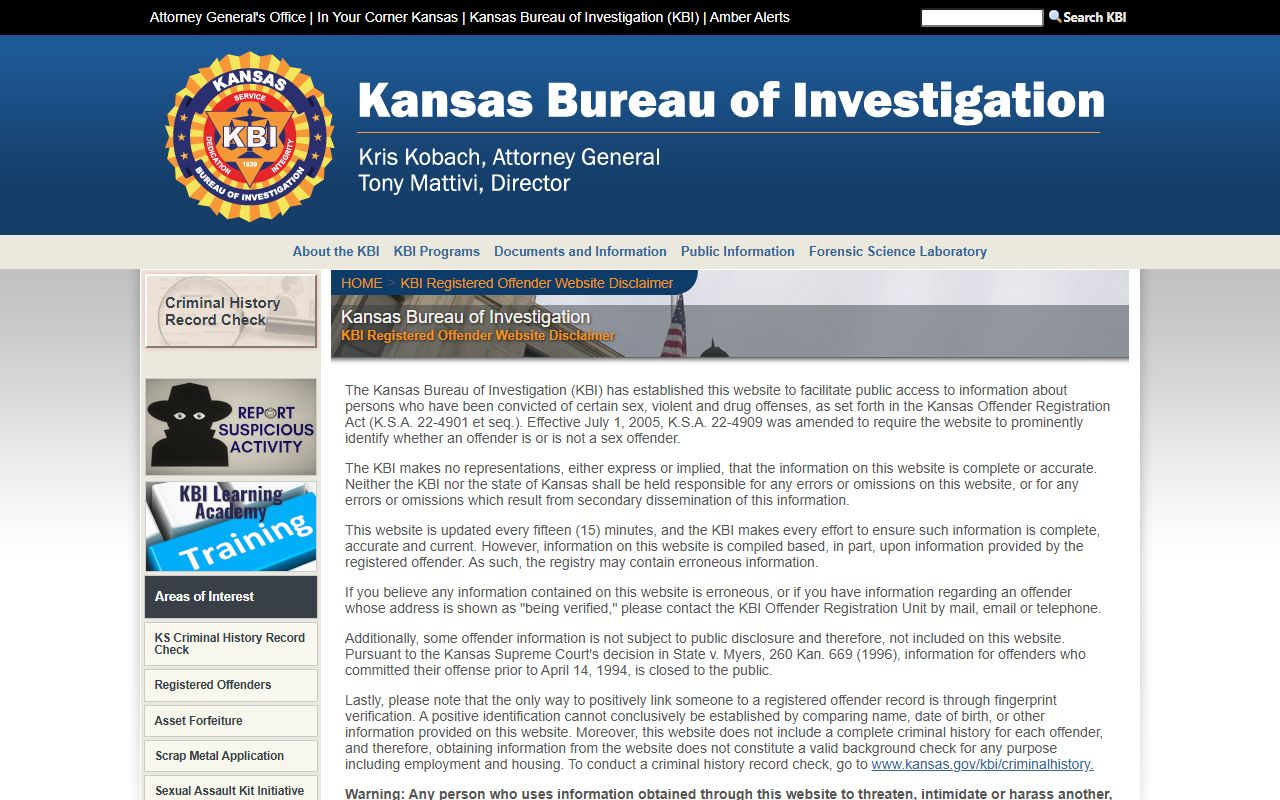
Use the registry only for its registry purpose. It should not be read as a complete criminal court record or current custody list.
Sealed vs. Expunged Records
Sealing and expungement both limit public access, but they are not the same. Kansas expungement under K.S.A. 21-6614 can cover qualifying arrest, conviction, and diversion records after eligibility rules are met. Eligibility depends on the offense, outcome, waiting period, completion of sentence or diversion, and statutory exclusions. For Sheridan County district court cases, petitions are generally filed in the court where the arrest, conviction, or diversion record occurred.
| Sealed | Expunged | |
|---|---|---|
| Public visibility | Closed from ordinary public inspection by statute or court order. | Removed from ordinary public access after a qualifying expungement order. |
| Record existence | The file still exists but access is limited. | Not treated as an ordinary public record, though agencies may retain limited-access records. |
| Who may access | Parties, attorneys, agencies, or others allowed by law or court order. | Certain agencies, licensing bodies, employers, or law-enforcement uses may still be allowed by statute. |
| How it happens | By statute, confidentiality rule, or court order. | By petition and court order if statutory eligibility is met. |
The manifest source for K.S.A. 21-6614 is the central Kansas expungement source used for this page.
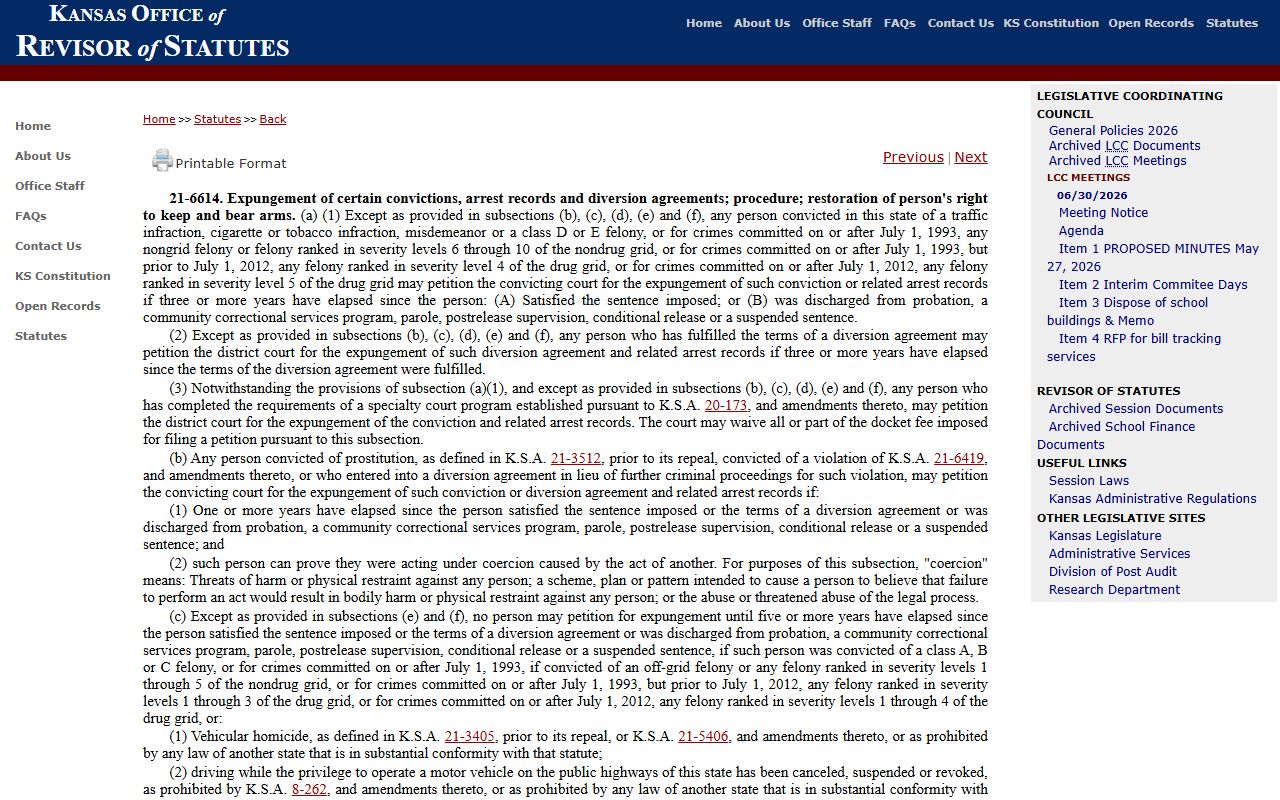
Sheridan-specific expungement filing fees, local form packets, and hearing schedules were not found in official sources reviewed, so the clerk should confirm current requirements.
Public Access to Criminal Court Records
Public access to adult criminal court records is shaped by the Kansas Open Records Act and Kansas Supreme Court rules. K.S.A. 45-218 creates a public-inspection baseline unless another law closes the record. K.S.A. 45-221 includes exemptions for criminal investigation records, security information, work product, and privacy-sensitive material. Kansas Supreme Court Rule 22 and Rule 106B govern electronic district court access, and Rule 24 addresses personal identifiers in filings.
The manifest source for K.S.A. 45-221 is especially important in criminal matters because law-enforcement investigation records can be restricted even when a related court docket is public.
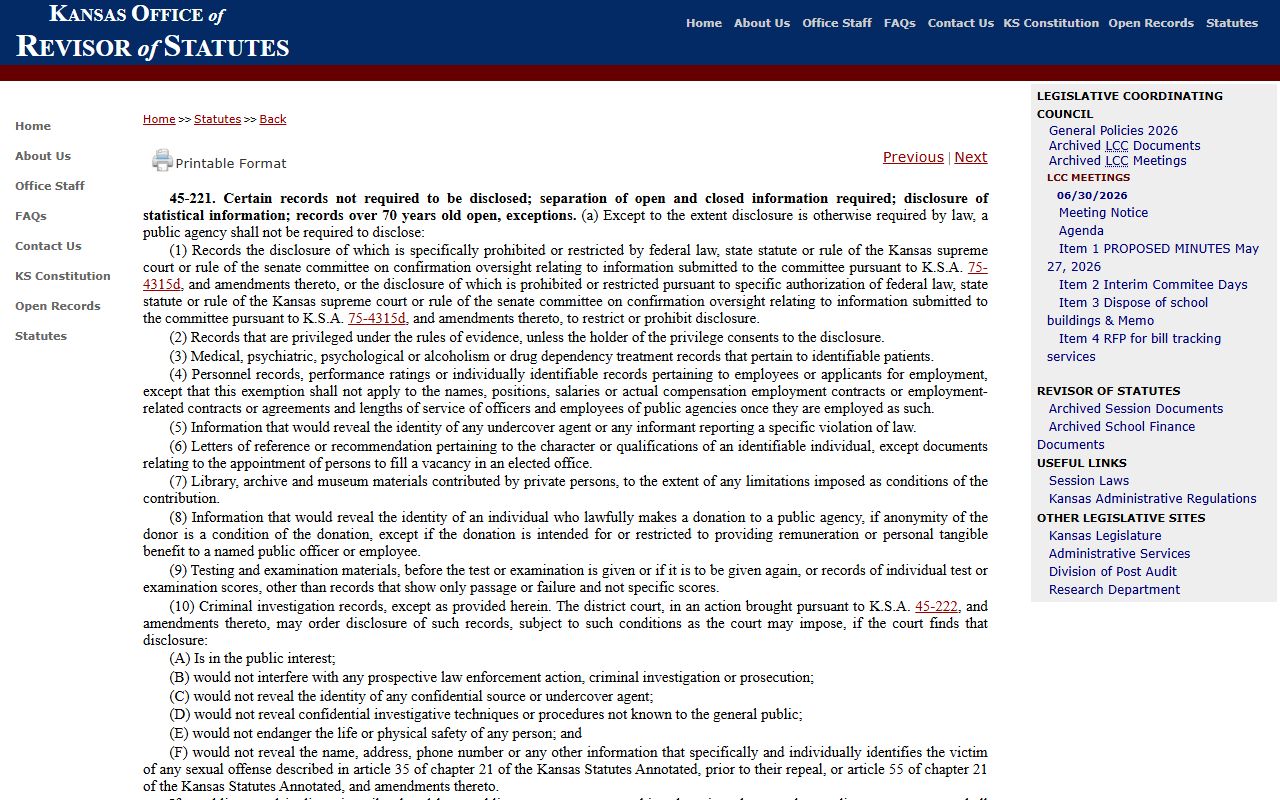
The practical result is that a court docket, a charging document, a sheriff report, and a criminal-history product can have different access rules.
Restricted Criminal Court Records in Sheridan County
Restricted criminal court records can include juvenile matters, sealed files, expunged arrests or convictions, diversion records after expungement, criminal investigation materials, confidential addresses, protected identifiers, mental health information, and files affected by court orders. A public online search may omit those records entirely or show a limited public entry. If a requester has party status, attorney authority, or another legal basis for access, the correct next step is to contact the district court clerk.
The manifest also includes the KBI registered-offender search portal, which should be kept distinct from Sheridan County criminal case dockets.
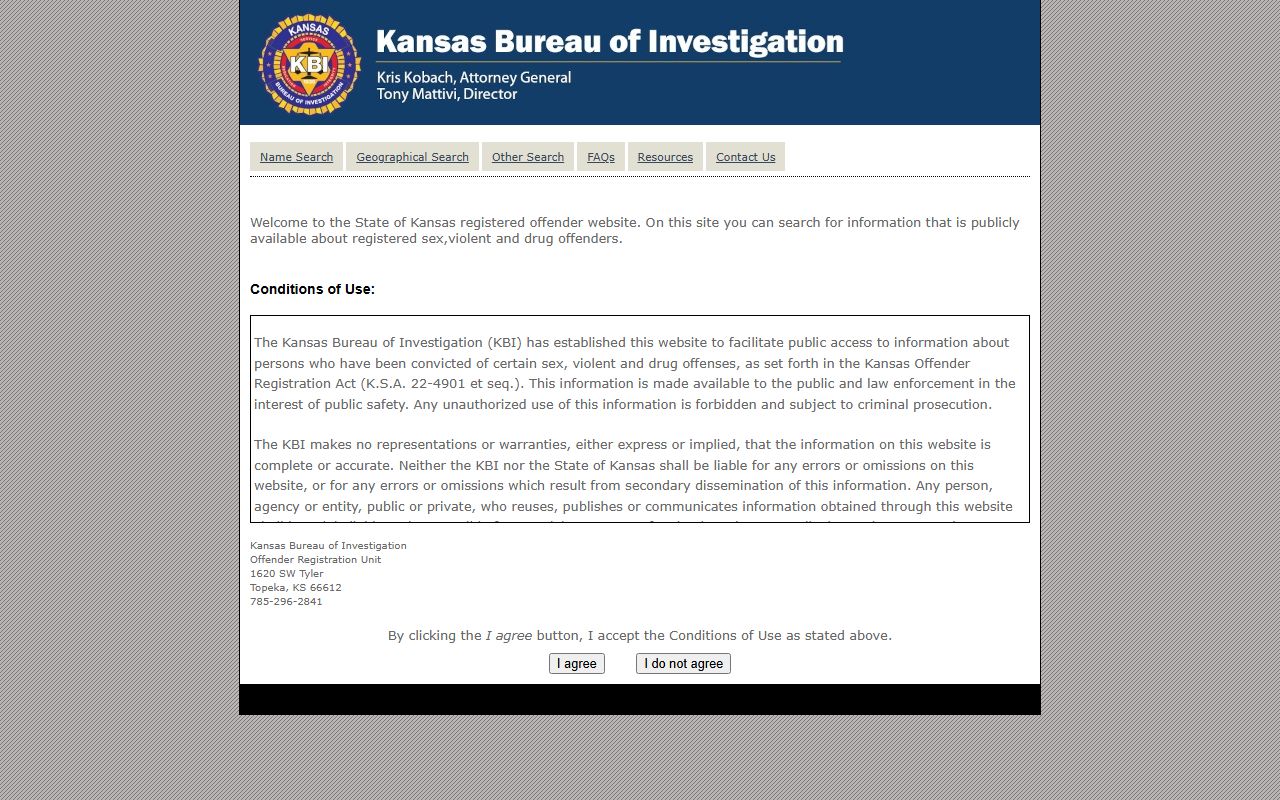
Registry status, KDOC status, court conviction, current warrant status, and current jail custody are different questions that may require different official offices.