
Sheridan County Probate Court Records
Probate is not handled by a standalone county probate court in Sheridan County. The State Court Structure Map and the 15th Judicial District materials place probate in district court, so the local name is the Probate Division of District Court. That office handles probate and administration of estates, guardianships, conservatorships, care and treatment matters, and related hearings through Sheridan County District Court.
Common probate records include wills, petitions to open an estate, orders admitting a will, letters testamentary, letters of administration, creditor notices, inventories, accountings, final settlement papers, and orders that close the case. Guardianship and conservatorship cases may include appointment papers, reports, financial records, medical references, and court orders. Not every document is public in full.
The Kansas Judicial Branch probate and elder law self-help page points users toward statewide probate resources and small-estate information.
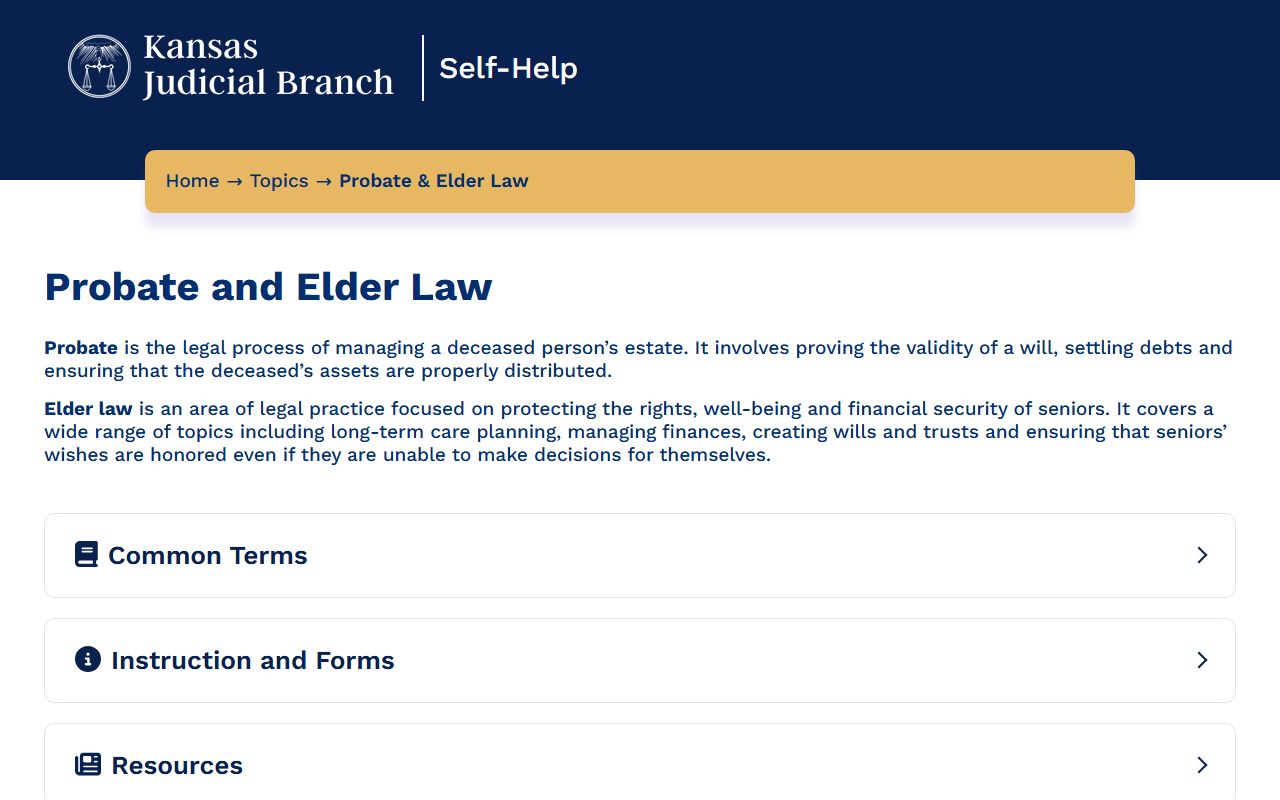
That statewide self-help source supports Sheridan County probate research, but the local filing and certified-copy questions still route to Sheridan County District Court.
Sheridan County Probate Terms
Probate filings use terms that are easy to mix up. The definitions below match the kinds of estate, will, guardian, and conservator records that may appear in Sheridan County District Court files.
- Testator
- The person who made a will.
- Executor
- The person named in a will to carry out estate duties after court authority is granted.
- Intestate
- Dying without a valid will, which means the estate is handled under Kansas succession rules.
- Guardianship
- A court case that gives a person legal authority to make personal-care decisions for another person.
- Conservatorship
- A court case that gives a person authority over another person's property or financial affairs.
Sheridan County Probate Contact
The local probate contact is the district court office at the Sheridan County Courthouse. Use this office for probate file location, filing questions, hearing questions, certified letters, and certified copies of orders. The county government mailing address is different from the district court mailing address, so probate mail should use the court's PO Box.
Sheridan County District Court
Probate Division of District Court
925 9th Street
PO Box 753
Hoxie, KS 67740
785-675-3451
Fax: 785-675-2256
The same court address is used for civil, domestic, criminal, probate, juvenile, small claims, and traffic matters filed in district court. The Sheridan County Clerk is a county administrative and election office, not the keeper of district court probate case files.
Sheridan County Probate Forms
Kansas Judicial Council publishes official probate forms. The research found statewide forms, including probate hearing notice and petition for allowance of demand, but did not locate a Sheridan-specific probate packet, local standing order, will-deposit rule, or filing checklist. The Judicial Council source warns users to seek an attorney after reading instructions, which is important because forms are templates rather than legal advice.
Use the Kansas Judicial Council probate forms source for statewide probate forms. Then confirm venue, filing needs, certified-copy fees, and hearing practice with Sheridan County District Court before relying on a form packet alone.
- Estate forms may relate to wills, petitions, notices, creditor claims, inventories, accountings, and final settlement.
- Guardianship and conservatorship forms may require more private personal, medical, or financial detail.
- Small-estate affidavit resources are referenced through Kansas self-help materials, but local suitability should be checked before use.
- Certified letters or orders should be requested from the district court clerk after the judge signs the needed order.
Search Sheridan County Probate Records
Probate access in Sheridan County uses a channel sweep instead of one single database promise. Kansas CaseSearch may show public probate cases when available, but the live field and result inventory was not captured in research. The courthouse remains important for older files, certified copies, and records that do not appear online.
- Search Kansas CaseSearch first when the decedent name, case number, party name, or related filing data is known.
- If no public result appears, call Sheridan County District Court at 785-675-3451 and ask whether the probate file is available by case number, estate name, or party name.
- Visit the courthouse for public terminal access or for files that require in-person review, subject to court rules and staff availability.
- Mail written requests to Sheridan County District Court, PO Box 753, Hoxie, KS 67740, when the clerk confirms the needed copy process.
- Request certified letters testamentary, letters of administration, or certified orders from the clerk when banks, title companies, agencies, or attorneys require proof of authority.
For broader district court searching, the Sheridan County court records page covers CaseSearch, courthouse terminals, and restricted court records in more detail.
Sheridan County Probate Fees
Official sources reviewed did not publish a Sheridan County probate filing-fee schedule or certified-copy table. The gap should not be filled with an assumed fee from another county because probate filing costs and copy charges can change by court rule, case type, document type, or service method.
| Item | Amount | What to do |
|---|---|---|
| Sheridan County probate filing fee | Fee not located in official Sheridan County sources | Contact Sheridan County District Court before filing. |
| Certified probate copy | Fee not located in official Sheridan County sources | Ask the clerk for current copy and certification cost. |
| Letters testamentary or administration copies | Fee not located in official Sheridan County sources | Confirm whether plain or certified letters are needed. |
| Kansas Judicial Council probate forms | Free online access | Official templates, not legal advice. |
Note: A missing local fee schedule is a research limit, not a sign that probate filing or certification is free.
Sheridan County Probate Process
The exact probate path depends on the kind of case. An estate with a will differs from an intestate estate, and both differ from guardianship or conservatorship. The research supports a practical process diagram for Sheridan County without inventing a local checklist that the court has not published.
Probate flow: Determine need › choose Kansas form or attorney-drafted filing › file in Sheridan County District Court if venue is proper › provide required notices and supporting documents › attend hearings if set › maintain inventories and accountings › request certified orders or letters › close the case when the court allows.
A will, death certificate, petition, proposed order, creditor notice, inventory, accounting, or final settlement may be involved depending on the case. Guardianship and conservatorship files can require reports and ongoing court oversight. Banks, title companies, and agencies often ask for certified letters or orders rather than a plain copy from a file.
Restricted Sheridan County Probate Records
Probate is a public court function, but some probate-related files are restricted. Guardianship, conservatorship, care and treatment, minor, medical, financial, and personal-identifier material can be redacted or closed from ordinary public access. Kansas court rules and Kansas privacy statutes may limit what appears in an online result, what can be viewed at a terminal, and what a clerk may release to a nonparty.
The research also points to child-in-need-of-care access limits under Kansas law, which are a reminder that minor-related court files are not routine public files. Although a probate case may be visible, sensitive supporting documents may require party status, attorney authority, or a court order.
The K.S.A. 38-2211 access-limit source was captured in the manifest for probate restrictions.
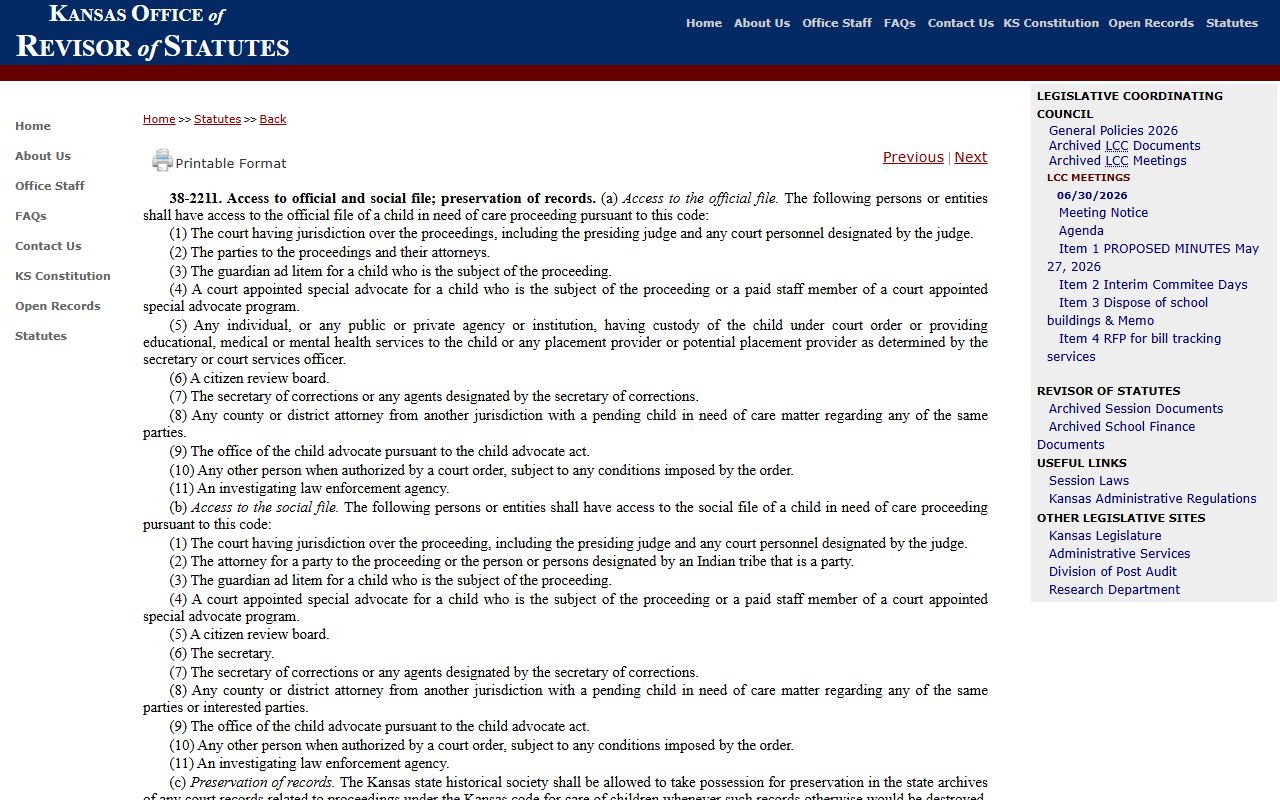
That restriction source should keep public probate searches grounded: estate documents may be available, while child, guardian, conservator, medical, and care records can be handled differently.